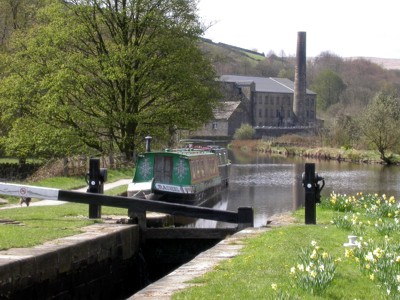
From Industry past to dramatic landscapes
The Huddersfield Narrow Canal is 20 miles long and runs from Ashton-under-Lyne to Huddersfield connecting the Ashton Canal in the West to the Huddersfield Broad (Sir John Ramsden’s Canal) in the East.
Work building the Canal commenced in 1794 and though it was largely completed some five years later, the construction of 3.1 miles of Standedge Tunnel took a further eleven years. Passing under the Pennines between Diggle and Marsden, the Tunnel was, and remains today, the longest, highest (above sea level) and deepest (underground) canal tunnel in Britain. It also boasts the oldest navigable cast iron aqueduct in the country at Stalybridge, constructed by the renowned engineer, Benjamin Outram in 1801.
The Canal was officially opened for through navigation on the 4th April 1811.
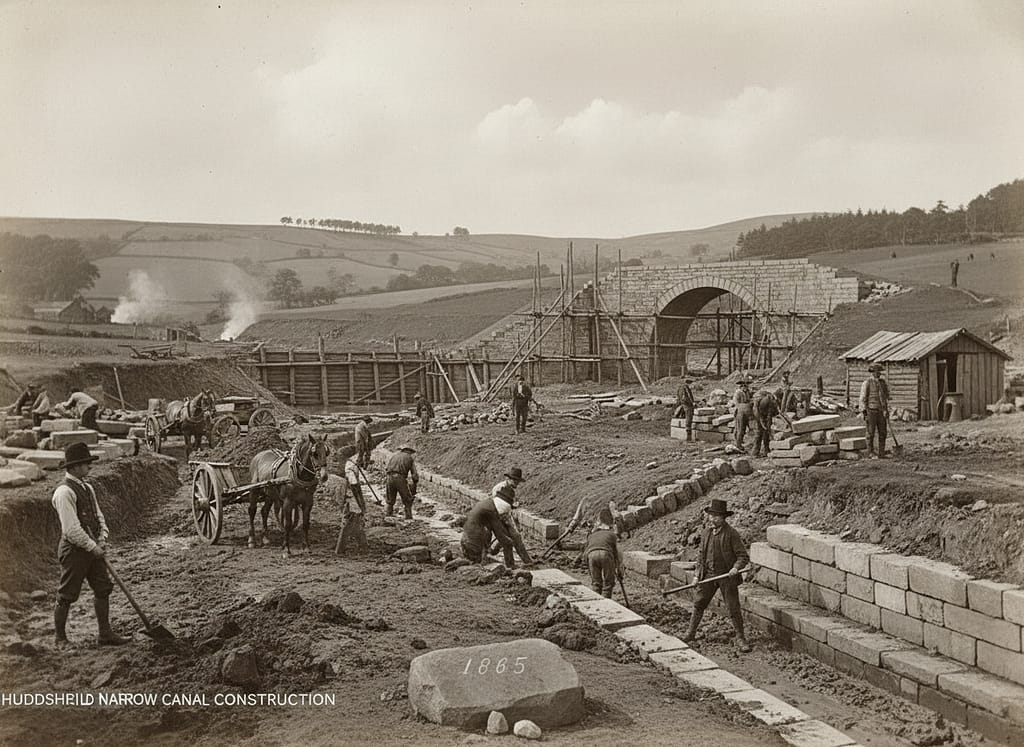
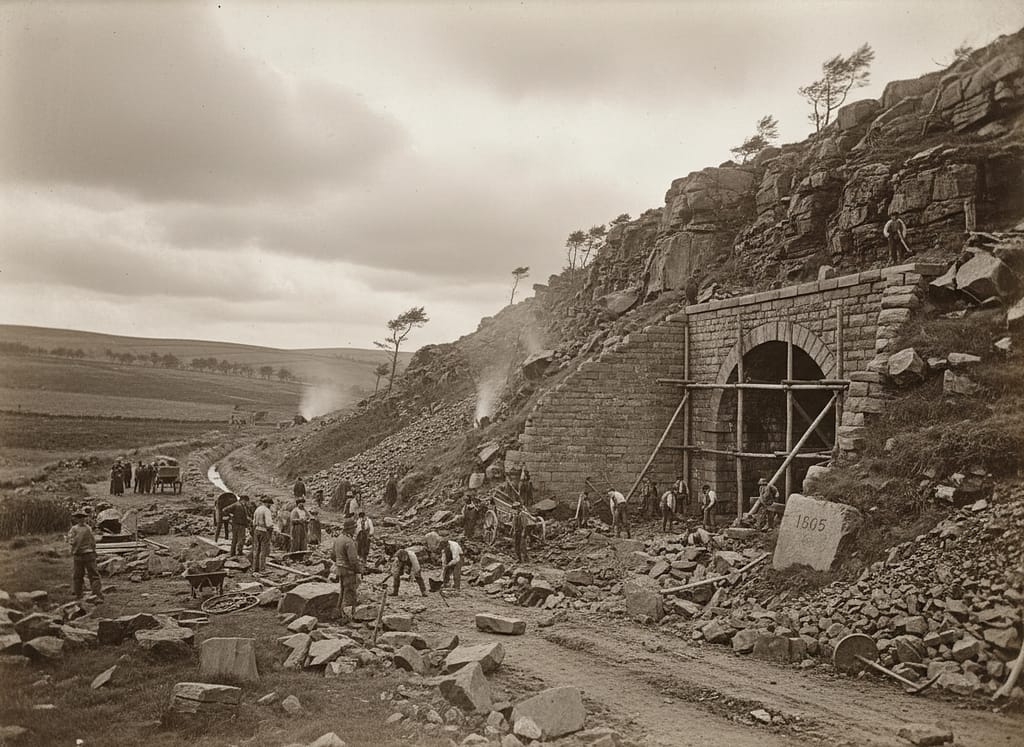
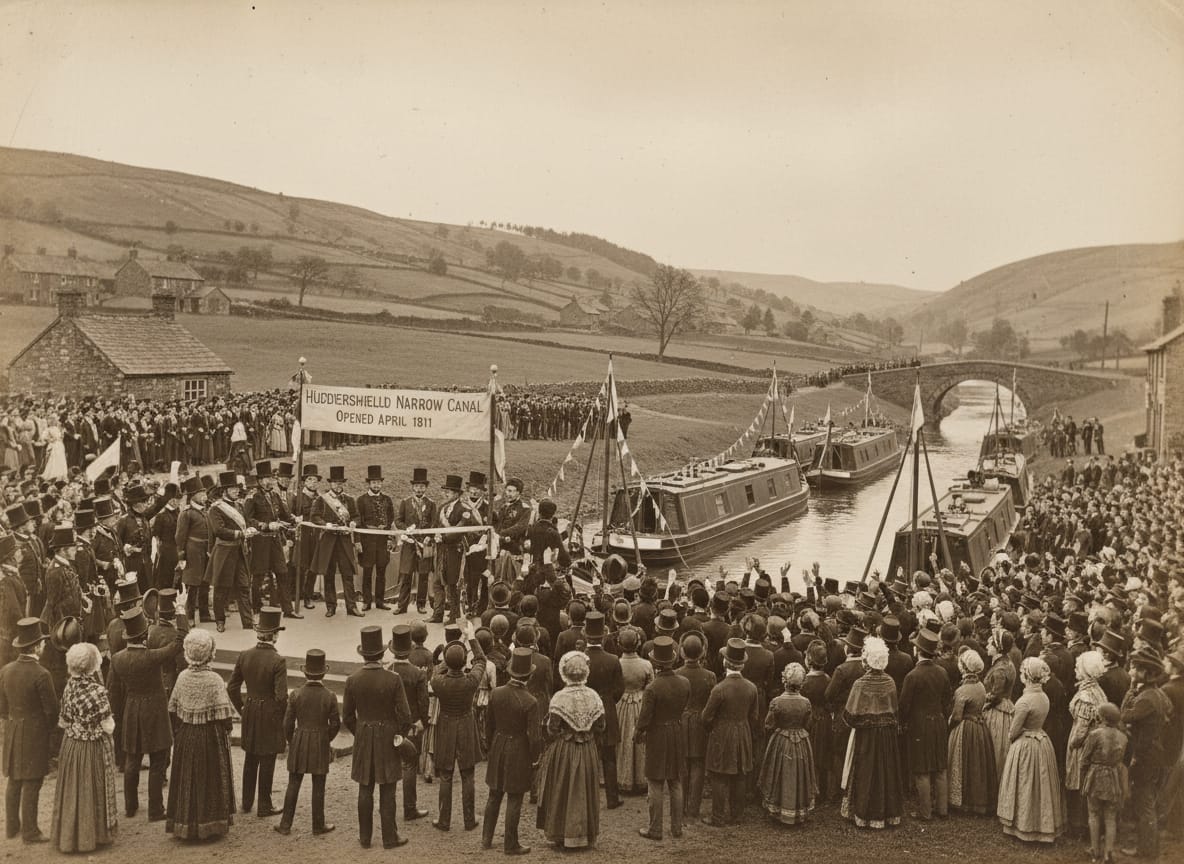
The Canal operated for 140 years but most of it was officially abandoned in 1944. Although minor, local traffic continued into the 1950s, many sections were infilled by the early 1960s and later developed. What remained of the Canal fell into dereliction.
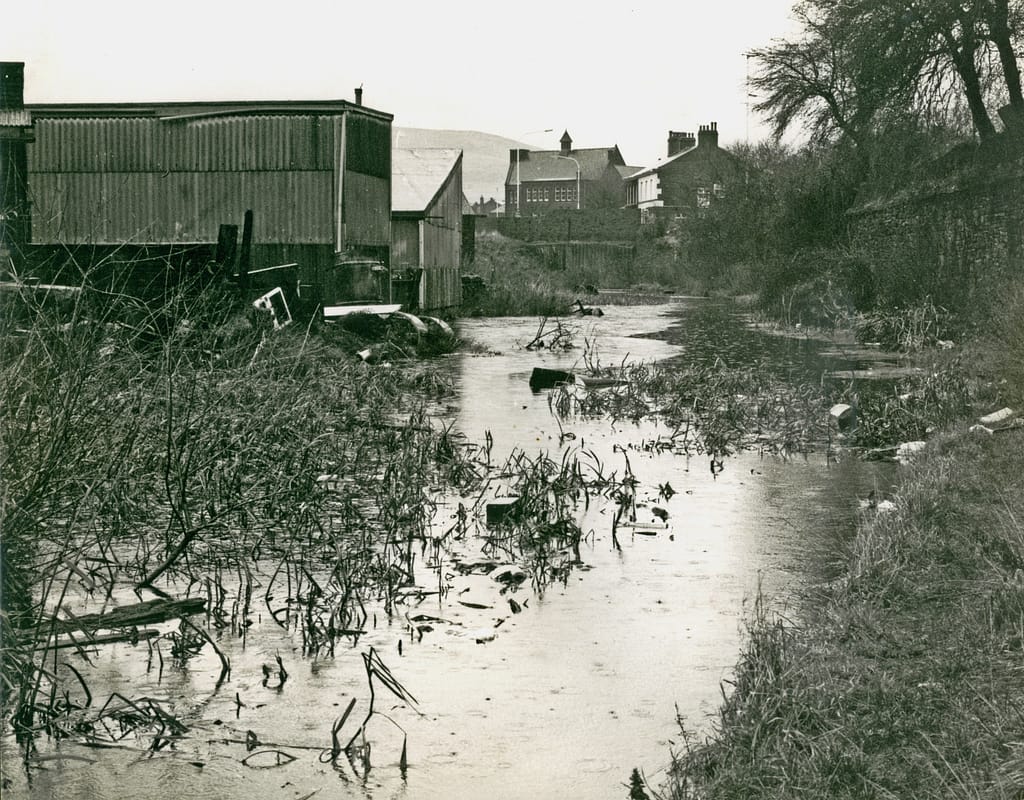
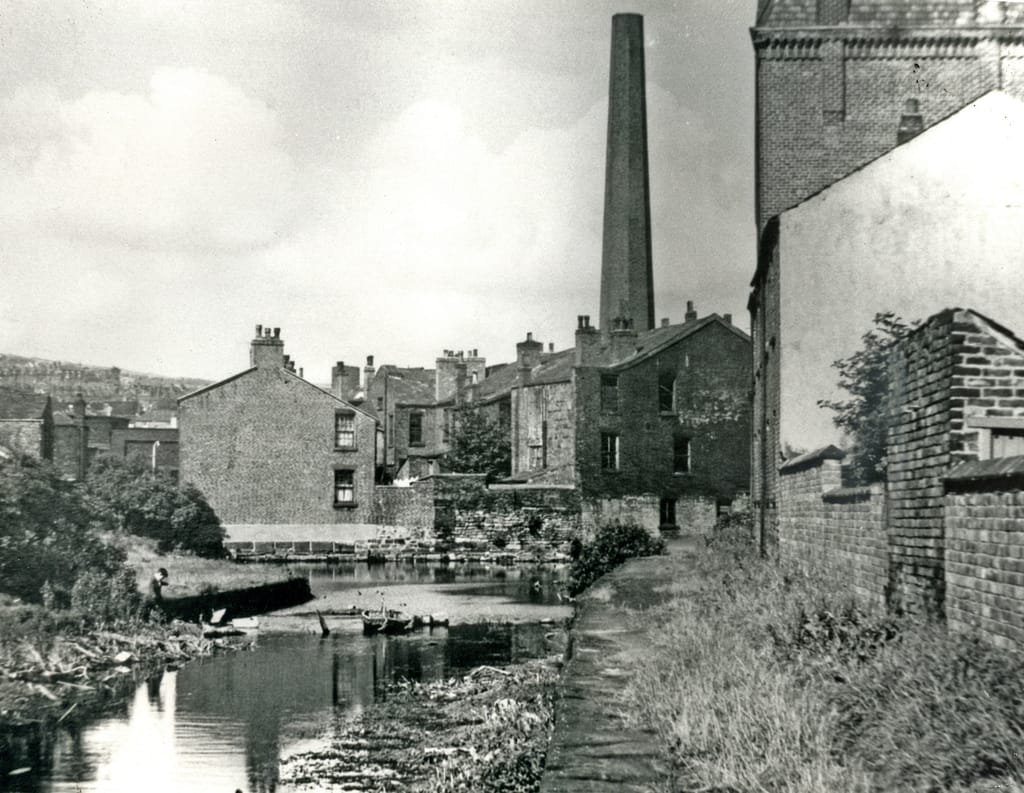
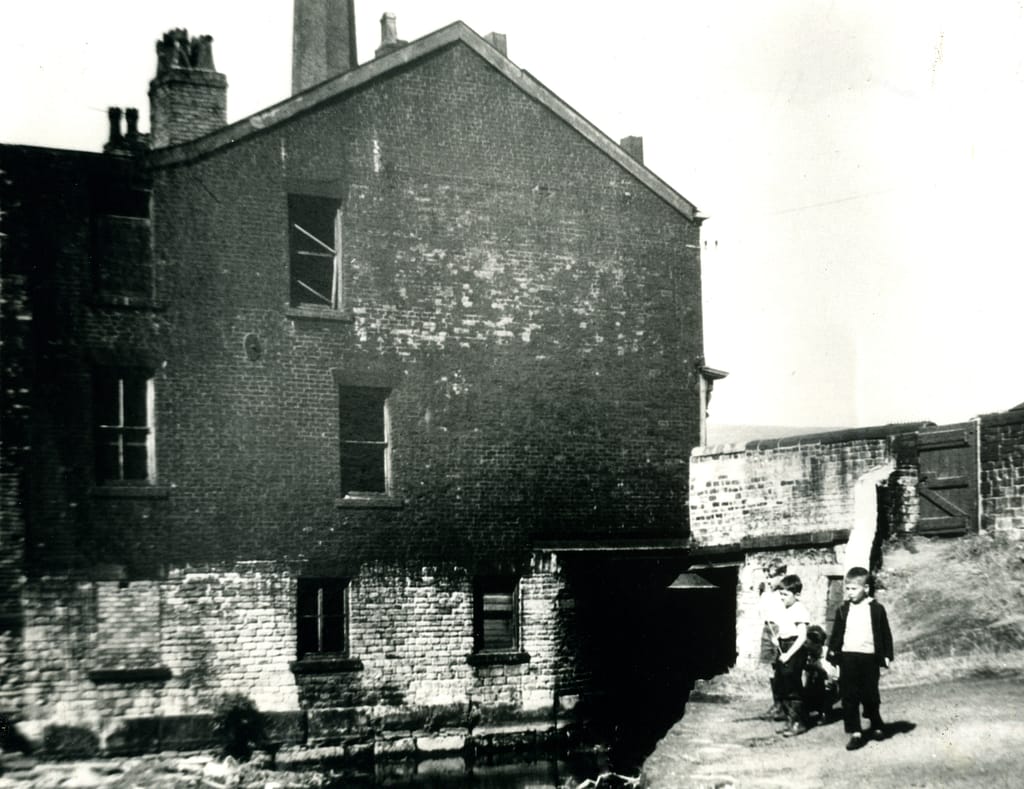
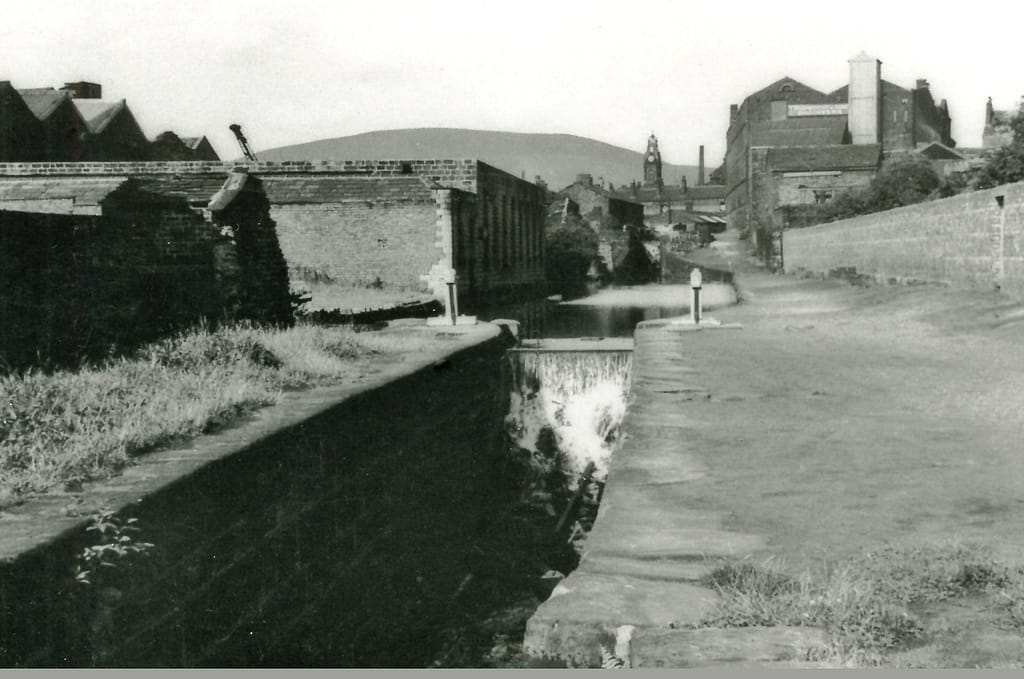
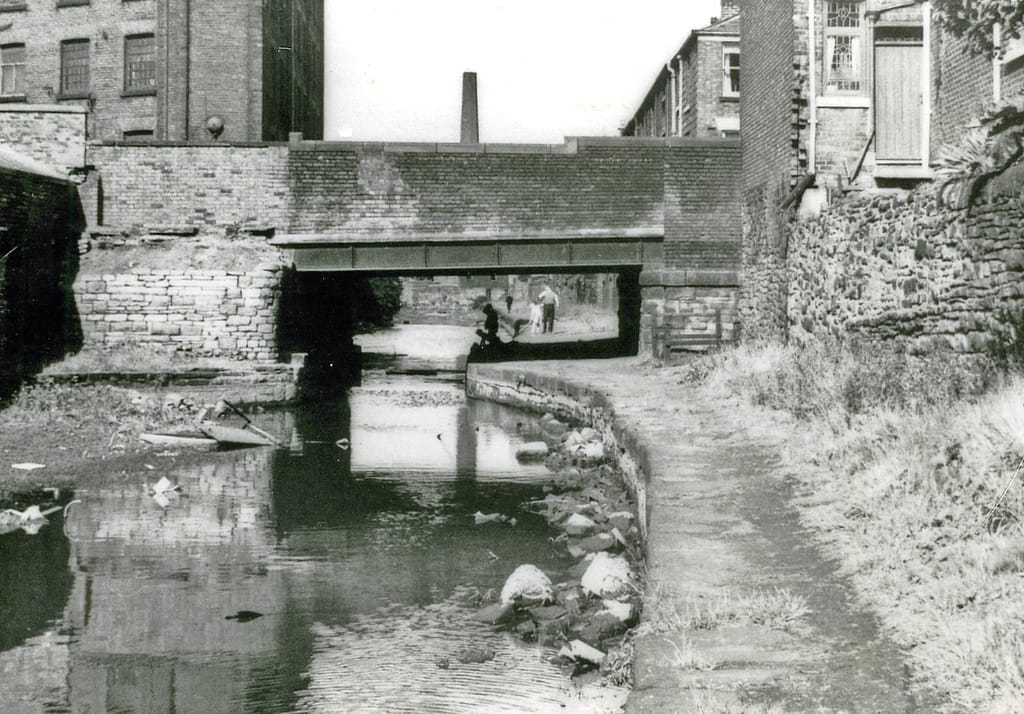
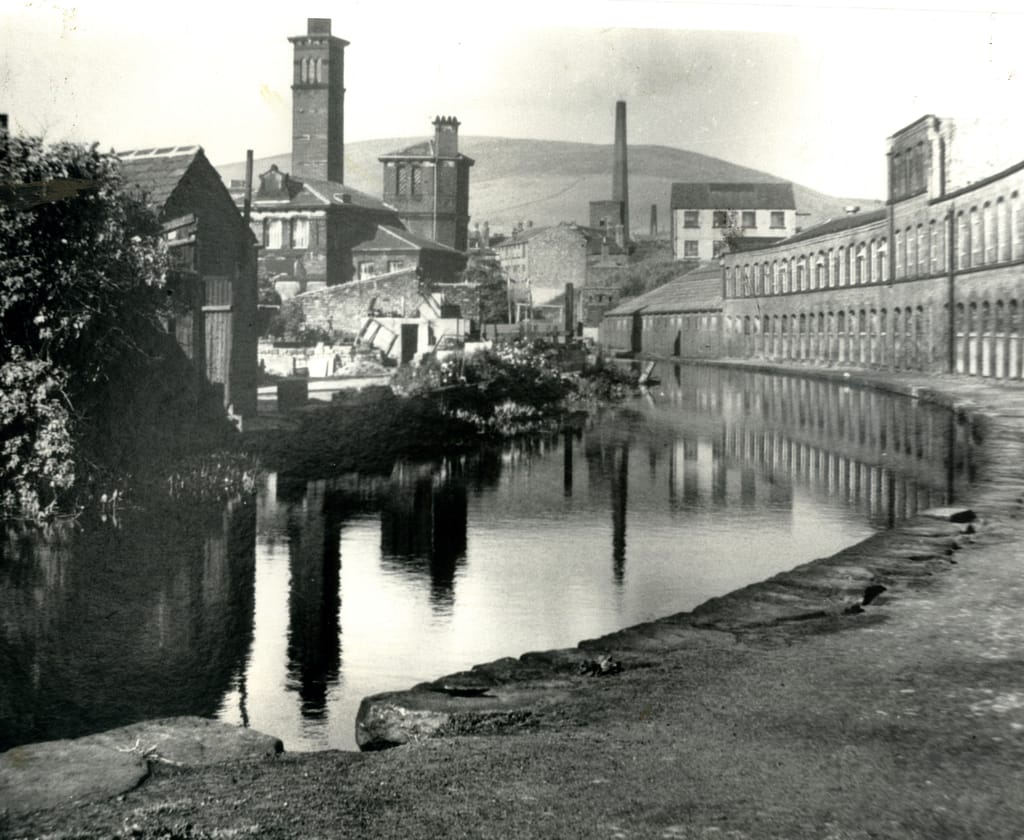
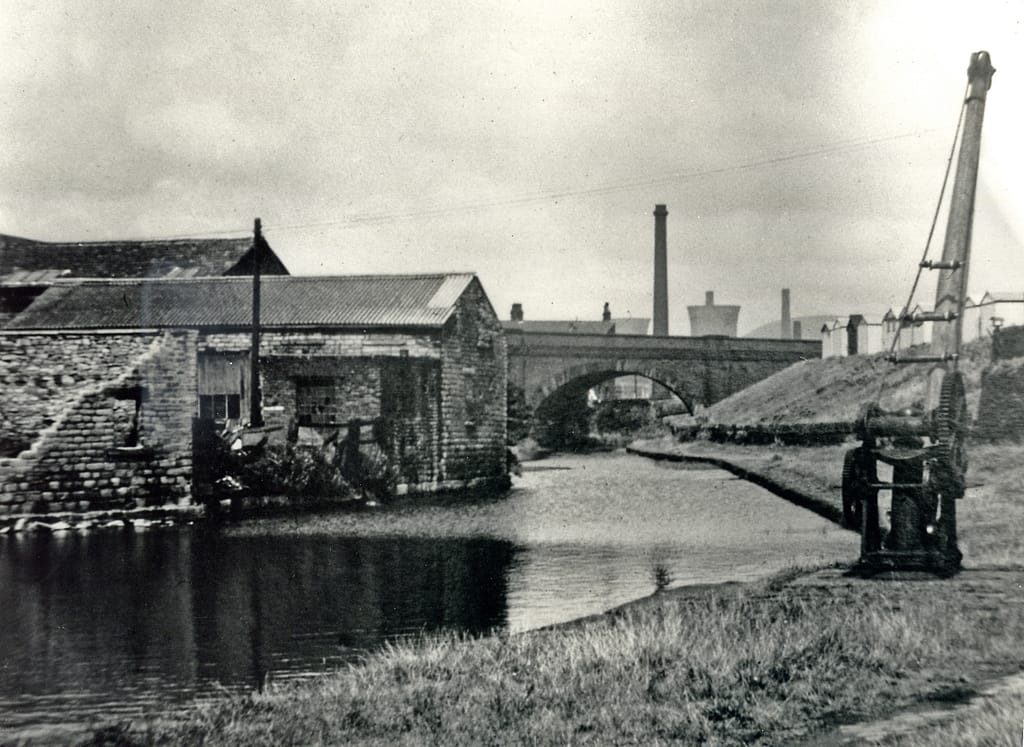
In 2026 we are celebrate 25 years since the reopening of the Huddersfield Narrow Canal. How was that possible when the canal was initially derelict with all 74 locks impassable, a closed 5,000-metre-long tunnel with roof falls, and with roads, buildings and other structures blocking the canal? The canal’s owners The British Waterways Board had no resources, nor the will to restore the canal which, with no connection to the national canal network, looked to be impossible anyway. The Inland Waterways Association was instrumental in making restoration of the Huddersfield Narrow a possibility when, in 1974, the adjoining Ashton and Peak Forest Canals were reopened to navigation and waterways restoration could begin in earnest.
On April 19th 1974, Bob Dewey, John Maynard and others joined together to form the Huddersfield Canal Society, beginning a movement aiming to restore the Huddersfield Narrow Canal. To many that seemed to be a hopeless task, with the three riparian local authorities, the two new Metropolitan County Councils set up that same April, and British Waterways Board, the owner of most of the route of the canal, being of the opinion that it was what Trevor Ellis dubbed as “the Impossible Restoration”.
Yet there soon was progress as a result of teamwork led by the Canal Society. Members of the Society realised that they would have to persuade the local authorities of Tameside, Oldham and Kirklees and The British Waterways Board (which was adamant that restoration of the canal was impossible), that restoration of the canal was possible. Before that, however, the Society had to persuade local people thanks to the sterling publicity led mainly by David Finnis with the Society holding regular meetings open to the public and meetings with the local authorities and with the British Waterways Board. The Society’s membership grew rapidly and, by 1984, with financial support from the Greater Manchester Council, the two locks in Uppermill were restored by the Society’s volunteers, demonstrating the attractiveness and viability of a restored canal.
But the Society had to move up a gear and use financial models to demonstrate the value of a restored canal. Members of the Society met members and officers of the five Local Authorities, civil servants and the officers of the British Waterways Board. As a result, monies were raised for small schemes, particularly with the national Job Creation Programme that aimed to create work for unemployed people. A cost benefit study was produced to impress potentially interested parties together with the formation of a Joint Committee to oversee restoration of the canal, with David Sumner representing the Canal Society. But that was short lived, as the Thatcher Government terminated the Metropolitan County Councils (Greater Manchester and West Yorkshire in our case).
As the ending of the Metropolitan County Councils approached, the Canal Society seized the chance to lobby for the canal and, as a result, a grant of £1.2million was made to the Society by the Greater Manchester Council in March 1986. Spent carefully, that made a huge difference: the Society was on its way. An office base was acquired in Tameside with permanent staff and, using whatever grants could then be found, as many as 48 of the locks had been restored by 1990. After meetings with the civil service, Derelict Land Grant funding was made available towards restoration work on the canal in 1991 and the local authorities began to see the value of the restoration, particularly in Tameside and Kirklees.
The introduction of the National Lottery was seen as likely to be a major source of grants for activities such as restoration of the canal. At the same time as setting up the lottery, the government set up English Partnerships as a public body sponsored by the Department for Communities and Local Government to support high quality sustainable growth in England. Unexpectedly, the National Lottery decided to mark the millennium as the twentieth century passed to the twenty-first century by setting up the Millennium Commission to give grants to major schemes that were unlikely to be easily funded otherwise. The Canal Society bid for funding to both the Millennium Commission and to English Partnerships with a total of £28million being jointly promised to complete the restoration of the canal.
Our Society had been a key player throughout with officers such as David Finnis, in the early days, Trevor Ellis and Keith Gibson throughout and, now, Alan Stopher all contributing to the project. We saw differences in approach by the Local Authorities over the years. Tameside Council originally wanted to restore navigation via the shallow river Tame. Oldham Council initially played a smaller role because the similarly derelict Rochdale Canal was much closer to the town of Oldham. Kirklees Council was enthusiastic right from the start because the canal passed through the Colne Valley, an area that had seen most of the textile mills close with work being very short towards the end of the twentieth century. The Society made a point of maintaining good relations with the local authority officers and members throughout and with the staff of the British Waterways Board. The Board’s role changed over the years, from the initial negativity to eventual enthusiasm, particularly with their work of restoring the Standedge Tunnel on time and to budget.
Between the various partners: the Canal Society, the local authorities and the British Waterways Board, restoration of the canal was eventually estimated to have cost about £45million and took about 20 years. The Society’s volunteers and staff deserve praise for their efforts to create the restoration of the canal. In total, the volunteers and those of the Inland Waterways Association, have given thousands of hours of involvement, particularly in the early years when it was deemed a battle to persuade all the other parties to agree to the Society’s restoration plans.
Although restored, the Canal Society still has an important role to play and, like the wider waterways movement, we contribute enormously to the environment and economy of the United Kingdom.
David Sumner MBE
President
Huddersfield Canal Society.


Now fully restored to through navigation, not only can boaters experience the challenge of this ‘Everest of the Canal System’, but it’s free for everyone else to enjoy; a fascinating linear park for all.
As the highest navigation, there are spectacular views
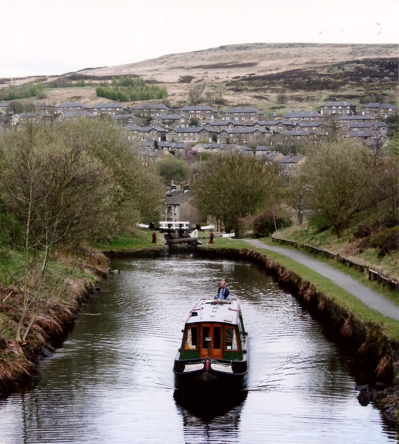
Much heritage remains